











Connecticut Witch Trial History
Before Salem, there was Connecticut.
Decades before the infamous trials in Salem, Connecticut was accusing and executing people for witchcraft. Discover the real individuals behind this disturbing chapter of colonial history, the fears and power structures that fueled the accusations, and the devastating consequences for families and communities.
These Connecticut sites commemorate the real history, which is more disturbing than any ghost story.
Although Connecticut may not have experienced the same level of hysteria that Salem, Massachusetts experienced from 1692-1693, the panic over witchcraft in Connecticut began four decades earlier than in Salem and continued in the state for several decades.
At least 49 people were accused of witchcraft in colonial Connecticut, according to the Connecticut Witch Trial Exoneration Project. Of these, at least 34 were indicted and at least 11 were hanged. Due to the incompleteness of records, the true toll cannot yet be established.
- Alse Young of Windsor, the first person executed for witchcraft in America, was one out of dozens of people accused, and one of at least 11 people hanged for witchcraft in Connecticut.
- Mary Johnson of Wethersfield was executed in 1648 after having confessed to entering into a compact with the devil, the earliest confession of this kind in the colonies.
- The first of several couples to be accused, Joan and John Carrington also of Wethersfield and prominent members of their communities, were executed in 1651.
Some of the accused were acquitted or exonerated with damages, while others fled the colony.
John Winthrop Jr. became Connecticut's governor and chief magistrate in 1657, and a few years later was given the critically important assignment of attaining an official royal charter from King Charles II. This charter established Connecticut as an independent colony, and amongst other privileges, granted Winthrop the right to pardon offenders, according to legal history.
Winthrop, a renowned alchemist and himself an occult practitioner, became involved in the colony’s witchcraft cases. He was able to overturn the conviction of Elizabeth Seager of Hartford at her third witchcraft trial in 1666 and save Katherine Harrison from a death sentence in 1669. Harrison's trial was notable in that it changed the way evidence is used in Connecticut, including determining that there should be a plurality of witnesses, at least two for every event.
Additionally, Winthrop led the way in determining that the burden of proof should be on the accusers rather than the accused and he lobbied to dismiss the use of spectral evidence (evidence based on dreams or visions). Over time Winthrop used his alchemist background to challenge the ideas of "diabolical magic".
In May 2023, Connecticut acknowledged a dark chapter in its past by formally absolving 12 people convicted of colonial-era witchcraft and apologizing for the injustice. As we explore this history, we remember that the accused were not legends or characters, but real people whose lives were forever changed.
Before Salem, there was Connecticut.
Decades before the infamous trials in Salem, Connecticut was accusing and executing people for witchcraft. Discover the real individuals behind this disturbing chapter of colonial history, the fears and power structures that fueled the accusations, and the devastating consequences for families and communities.
These Connecticut sites commemorate the real history, which is more disturbing than any ghost story.
Although Connecticut may not have experienced the same level of hysteria that Salem, Massachusetts experienced from 1692-1693, the panic over witchcraft in Connecticut began four decades earlier than in Salem and continued in the state for several decades.
At least 49 people were accused of witchcraft in colonial Connecticut, according to the Connecticut Witch Trial Exoneration Project. Of these, at least 34 were indicted and at least 11 were hanged. Due to the incompleteness of records, the true toll cannot yet be established.
- Alse Young of Windsor, the first person executed for witchcraft in America, was one out of dozens of people accused, and one of at least 11 people hanged for witchcraft in Connecticut.
- Mary Johnson of Wethersfield was executed in 1648 after having confessed to entering into a compact with the devil, the earliest confession of this kind in the colonies.
- The first of several couples to be accused, Joan and John Carrington also of Wethersfield and prominent members of their communities, were executed in 1651.
Some of the accused were acquitted or exonerated with damages, while others fled the colony.
John Winthrop Jr. became Connecticut's governor and chief magistrate in 1657, and a few years later was given the critically important assignment of attaining an official royal charter from King Charles II. This charter established Connecticut as an independent colony, and amongst other privileges, granted Winthrop the right to pardon offenders, according to legal history.
Winthrop, a renowned alchemist and himself an occult practitioner, became involved in the colony’s witchcraft cases. He was able to overturn the conviction of Elizabeth Seager of Hartford at her third witchcraft trial in 1666 and save Katherine Harrison from a death sentence in 1669. Harrison's trial was notable in that it changed the way evidence is used in Connecticut, including determining that there should be a plurality of witnesses, at least two for every event.
Additionally, Winthrop led the way in determining that the burden of proof should be on the accusers rather than the accused and he lobbied to dismiss the use of spectral evidence (evidence based on dreams or visions). Over time Winthrop used his alchemist background to challenge the ideas of "diabolical magic".
In May 2023, Connecticut acknowledged a dark chapter in its past by formally absolving 12 people convicted of colonial-era witchcraft and apologizing for the injustice. As we explore this history, we remember that the accused were not legends or characters, but real people whose lives were forever changed.
Before Salem, there was Connecticut.
Decades before the infamous trials in Salem, Connecticut was accusing and executing people for witchcraft. Discover the real individuals behind this disturbing chapter of colonial history, the fears and power structures that fueled the accusations, and the devastating consequences for families and communities.
These Connecticut sites commemorate the real history, which is more disturbing than any ghost story.
Although Connecticut may not have experienced the same level of hysteria that Salem, Massachusetts experienced from 1692-1693, the panic over witchcraft in Connecticut began four decades earlier than in Salem and continued in the state for several decades.
At least 49 people were accused of witchcraft in colonial Connecticut, according to the Connecticut Witch Trial Exoneration Project. Of these, at least 34 were indicted and at least 11 were hanged. Due to the incompleteness of records, the true toll cannot yet be established.
- Alse Young of Windsor, the first person executed for witchcraft in America, was one out of dozens of people accused, and one of at least 11 people hanged for witchcraft in Connecticut.
- Mary Johnson of Wethersfield was executed in 1648 after having confessed to entering into a compact with the devil, the earliest confession of this kind in the colonies.
- The first of several couples to be accused, Joan and John Carrington also of Wethersfield and prominent members of their communities, were executed in 1651.
Some of the accused were acquitted or exonerated with damages, while others fled the colony.
John Winthrop Jr. became Connecticut's governor and chief magistrate in 1657, and a few years later was given the critically important assignment of attaining an official royal charter from King Charles II. This charter established Connecticut as an independent colony, and amongst other privileges, granted Winthrop the right to pardon offenders, according to legal history.
Winthrop, a renowned alchemist and himself an occult practitioner, became involved in the colony’s witchcraft cases. He was able to overturn the conviction of Elizabeth Seager of Hartford at her third witchcraft trial in 1666 and save Katherine Harrison from a death sentence in 1669. Harrison's trial was notable in that it changed the way evidence is used in Connecticut, including determining that there should be a plurality of witnesses, at least two for every event.
Additionally, Winthrop led the way in determining that the burden of proof should be on the accusers rather than the accused and he lobbied to dismiss the use of spectral evidence (evidence based on dreams or visions). Over time Winthrop used his alchemist background to challenge the ideas of "diabolical magic".
In May 2023, Connecticut acknowledged a dark chapter in its past by formally absolving 12 people convicted of colonial-era witchcraft and apologizing for the injustice. As we explore this history, we remember that the accused were not legends or characters, but real people whose lives were forever changed.
Before Salem, there was Connecticut.
Decades before the infamous trials in Salem, Connecticut was accusing and executing people for witchcraft. Discover the real individuals behind this disturbing chapter of colonial history, the fears and power structures that fueled the accusations, and the devastating consequences for families and communities.
These Connecticut sites commemorate the real history, which is more disturbing than any ghost story.
Although Connecticut may not have experienced the same level of hysteria that Salem, Massachusetts experienced from 1692-1693, the panic over witchcraft in Connecticut began four decades earlier than in Salem and continued in the state for several decades.
At least 49 people were accused of witchcraft in colonial Connecticut, according to the Connecticut Witch Trial Exoneration Project. Of these, at least 34 were indicted and at least 11 were hanged. Due to the incompleteness of records, the true toll cannot yet be established.
- Alse Young of Windsor, the first person executed for witchcraft in America, was one out of dozens of people accused, and one of at least 11 people hanged for witchcraft in Connecticut.
- Mary Johnson of Wethersfield was executed in 1648 after having confessed to entering into a compact with the devil, the earliest confession of this kind in the colonies.
- The first of several couples to be accused, Joan and John Carrington also of Wethersfield and prominent members of their communities, were executed in 1651.
Some of the accused were acquitted or exonerated with damages, while others fled the colony.
John Winthrop Jr. became Connecticut's governor and chief magistrate in 1657, and a few years later was given the critically important assignment of attaining an official royal charter from King Charles II. This charter established Connecticut as an independent colony, and amongst other privileges, granted Winthrop the right to pardon offenders, according to legal history.
Winthrop, a renowned alchemist and himself an occult practitioner, became involved in the colony’s witchcraft cases. He was able to overturn the conviction of Elizabeth Seager of Hartford at her third witchcraft trial in 1666 and save Katherine Harrison from a death sentence in 1669. Harrison's trial was notable in that it changed the way evidence is used in Connecticut, including determining that there should be a plurality of witnesses, at least two for every event.
Additionally, Winthrop led the way in determining that the burden of proof should be on the accusers rather than the accused and he lobbied to dismiss the use of spectral evidence (evidence based on dreams or visions). Over time Winthrop used his alchemist background to challenge the ideas of "diabolical magic".
In May 2023, Connecticut acknowledged a dark chapter in its past by formally absolving 12 people convicted of colonial-era witchcraft and apologizing for the injustice. As we explore this history, we remember that the accused were not legends or characters, but real people whose lives were forever changed.
Key Witch Trial-Related Sites In Connecticut
Hartford
Hartford was the epicenter of the Hartford Witch Panic of 1662-1663; the site of most of Connecticut’s witch trials, and the primary execution site. In May of 1647, Alse Young of Windsor was hanged at the gallows by Meeting House Square in Hartford on what is now the site of the Old State House. The plaza adjacent to the Old State House was the location of the old jail, and the Old State House is on the location of the old meetinghouse.
Rebecca Greensmith of Hartford and her husband, Nathaniel, were hanged in 1663, during the Hartford Witch-Hunt. Rebecca confessed, and accused her husband in her confession, according to the Connecticut Witch Trial Exoneration Project.
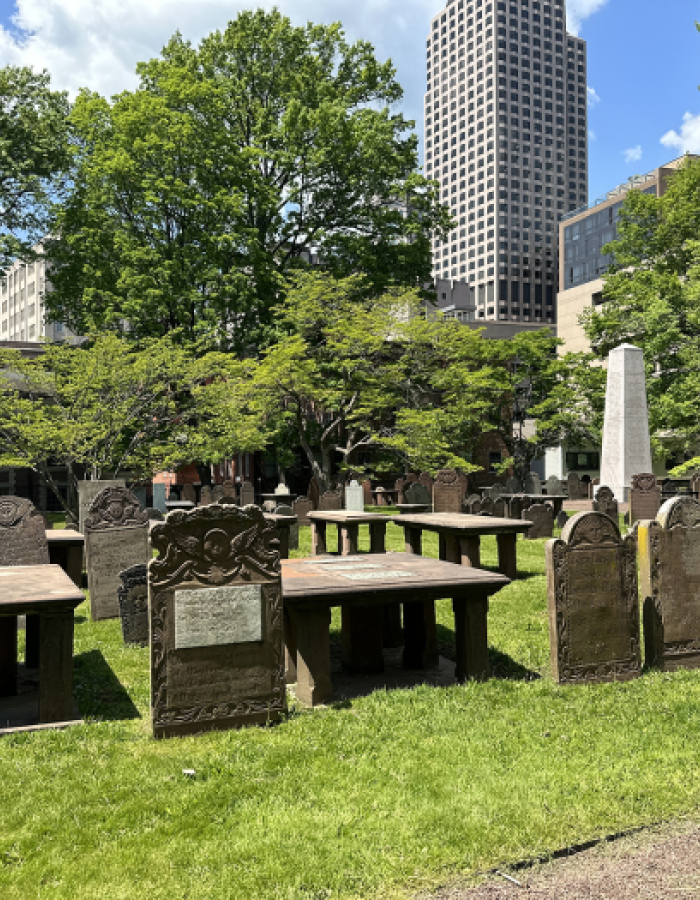
The Ancient Burying Ground in Hartford contains the gravestones or markers of 14 men who had connections to the witchcraft trials in 17th-century Connecticut. Many were involved in the court proceedings as magistrates.
Wethersfield
Connecticut’s withcraft trials were among the first such trials in New England, preceding Salem’s by four decades. And Mary Johnson’s 1648 confession of witchcraft in Wethersfield was the first of its kind in the colonies. Wethersfield had nine documented accusations and three executions between 1648 and 1668.
In Johnson's case, there was no trial or even a documented accusation, as she was pressured to confess. Later, Wethersfield's Joan and John Carrington became the first married couple to be arrested and hanged together.
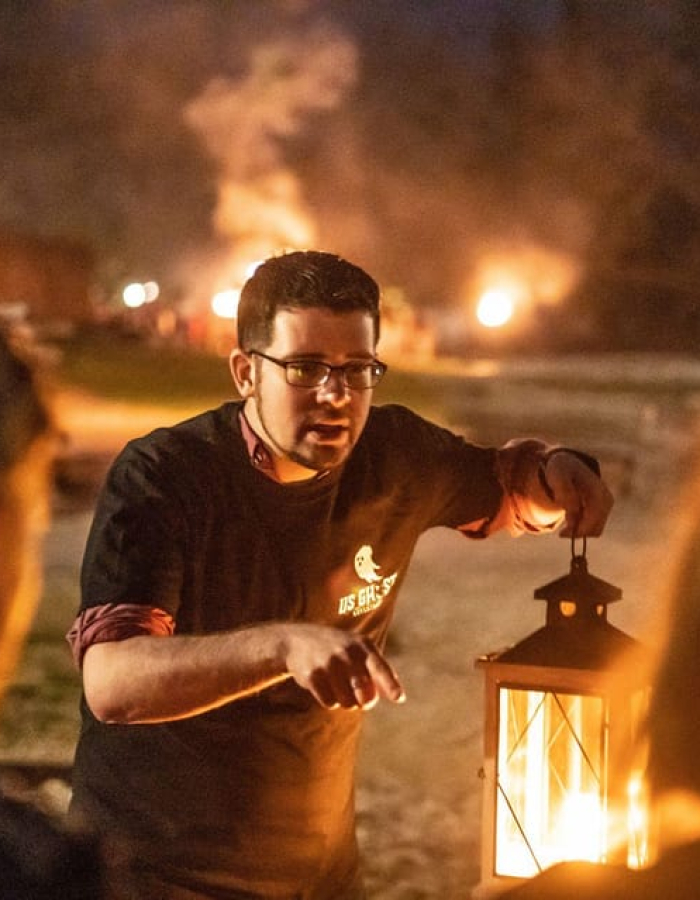
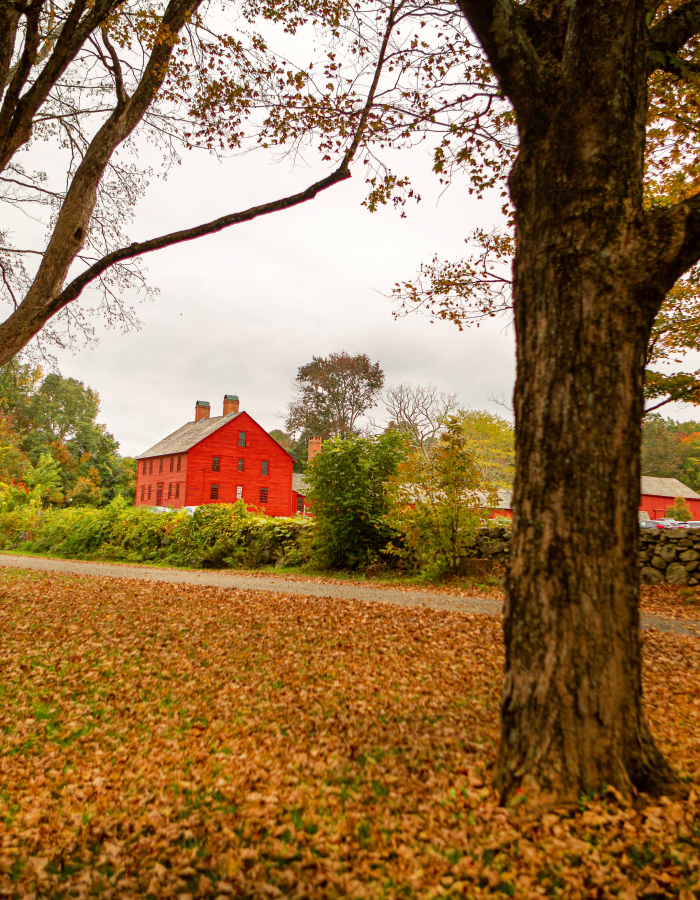
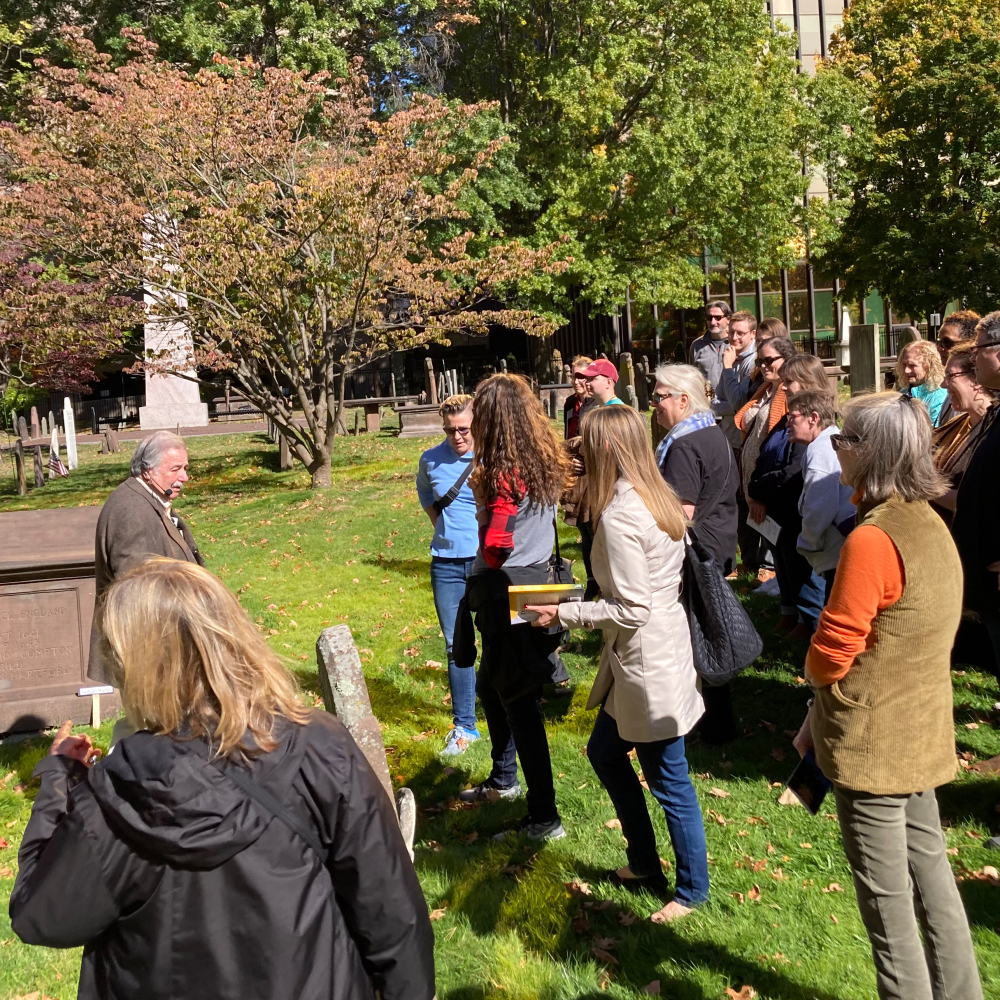
The Witches and Tombstones Tour hosted by the Webb-Deane-Stevens museum connects the Buttolph-Williams House, Wethersfield witch-trial stories, and ancient burying grounds. The final stop on the tour is the Buttolph-Williams House (ca. 1711), the setting for the Newbery-winning children’s novel "The Witch of Blackbird Pond" by Elizabeth George Speare.
Windsor was the home of Alse (Alice) Young and Lydia Gilbert, Alice was the first person executed for witchcraft by colonial authorities in America, on May 26, 1647. Lydia was hanged for witchcraft in 1654 for supposedly bewitching a gun which misfired during a training exercise, killing a man. Goodwife Messenger was slandered here in 1673.
The town of Windsor was at one time home to a variety of others later involved in witchcraft accusations elsewhere. Visit the Windsor Historical Society to learn more about this historic town.
Memorial for Alse Young and Lydia Gilbert, Windsor
This memorial honors Alse (Alice) Young and Lydia Gilbert, the two Connecticut women executed for witchcraft decades before the Salem trials. Their stories were rediscovered through 17th‑century church records, and both are now commemorated with engraved bricks in a small plaza on the Windsor town green.
Stamford was a key location in the 1692 Stamford-Fairfield Witch-Hunt. Katharine Branch, a 17-year-old "afflicted by strange visions and given to blood-chilling wails of pain and fright," accused several women of bewitching her. Two of them were put on trial for witchcraft.
Goodwife Knapp was a Fairfield resident who was accused of witchcraft, tried by the elders of the colony, and ultimately hanged in 1653 in a field that is now part of Bridgeport. The Black Rock neighborhood in Bridgeport is the location of the Goody Knapp Memorial.
Mercy Disborough / Compo Witch-Trial History
The Compo neighborhood of Westport was home of Mercy Holbridge Disborough, who was accused of witchcraft in the 1692 Stamford-Fairfield Witch-Hunt. She was convicted and condemned to die, but was reprieved.
Goody Bassett Historical Sites, Stratford
Goodwife Bassett of Stratford was tried and executed in 1651. Little is known about her, including her first name and maiden name, but she was officially exonerated in 2023 and a plaque dedicated to her memory was placed on the Stratford Green.
Goody Bassett's Ice Cream in the center of Stratford is also named for the historical figure. Modeled after a 19th-century establishment, the business is inspired by the local legend.
Stanley-Whitman House / The Mary Barnes Society, Farmington
The Mary Barnes Society at Stanley-Whitman House is dedicated to supporting the study of the Connecticut Witch Trials, with the goal of a deeper understanding of the people and cultures of this time in history. It's named for Mary Barnes, a Farmington woman who was executed on January 25, 1663 - one of the last people executed in Connecticut for witchcraft.
Ancient Burying Ground, Hartford
The Ancient Burying Ground Association seeks to preserve and promote Hartford’s historic burial ground. The Ancient Burying Ground contains the gravestones or markers of 14 men who had connections to the witchcraft trials in 17th-century Connecticut. Many were involved in the court proceedings as magistrates.
Wallingford Historical Society / Winifred Benham Witch-Trial History
Winifred Benham and her daughter, also Winifred, were both accused of witchcraft. Their 1697 trial was the last known witch trial in New England. Visit the Wallingford Historical Society to learn more about the Benhams, who were among the founding families of the town.
Old Saybrook Historical Society
Saybrook was home of an unknown person or persons accused of witchcraft in 1659; Margaret and Nicholas Jennings (acquitted 1661), and Hannah Griswold (slandered 1657). Visit the Old Saybrook Historical Society for more information.
“The First: Witchcraft in Connecticut” event in October explores the trials of Woodbury's "Witch" Moll Cramer and others accused of witchcraft in colonial Connecticut. Learn why the Connecticut River Valley was central to witch executions, and hear stories of survival and tragic fates.